
The Galápagos, Ecuador
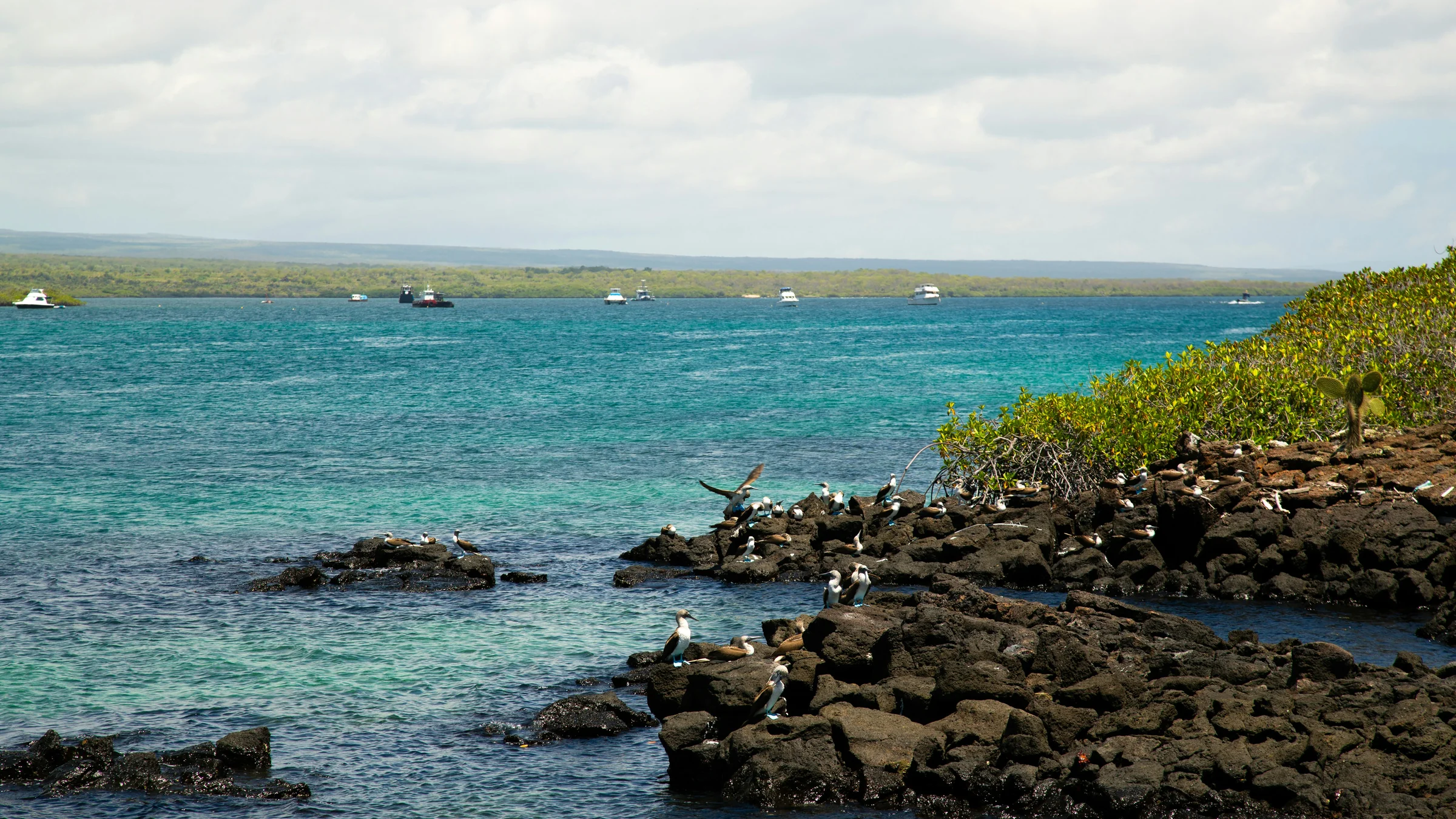
The Galápagos are the rare destination where the wildlife genuinely doesn't care about you — a humbling that no other archipelago offers. The sea lions sleep on benches in Puerto Ayora. The marine iguanas don't move when you walk past. The tortoises register you, briefly, as weather.
Why the Galápagos earn the long flight
The Galápagos are 97% national park, and the tourism model — permits, mandatory naturalist guides, capped-itinerary cruise routes, no introduction of non-endemic species — is one of the most successful conservation regimes anywhere. The result is what you remember: penguins on the equator, marine iguanas that eat algae underwater, blue-footed boobies that won't move when you photograph them at three feet. The wildlife treats humans as a non-event because four hundred years of evolutionary history hasn't yet trained otherwise.
The threshold question for Galápagos planning is small-boat-vs-land-based. Both are defensible; they are different trips. A small-boat cruise (12–16 passengers, naturalist-led, sleeping on the boat between islands) covers more ground and accesses the remote western and northern islands that day-boats cannot. A land-based stay (Santa Cruz or Isabela, day-boating to nearby islands) is cheaper, slower, and lets you wake up in the same bed. Trepic creators tend to recommend small-boat for the first trip and land-based for the return.
Where to stay
Trepic does not yet have a hotel partner in the Galápagos. For small-boat: Ecoventura's Origin/Theory/Evolve trio (16 passengers, the polished mid-luxury option), Aqua Mare (the new ultra-luxury yacht for 16, the high end), and National Geographic Endeavour II for the more education-forward trip. For land-based: Pikaia Lodge on Santa Cruz (the highland luxury anchor, with on-site tortoise reserve), Finch Bay in Puerto Ayora, and Scalesia Lodge on Isabela.
The mindful-travel index, for the Galápagos
| Dimension | Score / 100 |
|---|---|
| Silence | 86 |
| Walkability | 72 |
| Locals-to-tourists ratio | 84 |
| Rewards a longer stay | 86 |
| Unphotographed-ness | 86 |
The Galápagos rank #10 overall on the Trepic 2026 Index. The "unphotographed-ness" score is high not because the islands aren't photographed (they are — endlessly) but because the encounters that move you are the ones that don't make the highlight reel: the small bird that lands on your hat, the post-dinner constellation tour, the swim with the sea lions you didn't film because you forgot the camera was waterproof.
What to actually do
If you go small-boat: the standard 7-night western itinerary covers Isabela's Tagus Cove (flightless cormorants), Fernandina's Punta Espinoza (the largest marine iguana colony), Santiago's Puerto Egas (fur seals), Bartolomé (the postcard volcanic landscape), and South Plaza (land iguanas). The eastern itinerary trades these for Española (waved albatrosses), San Cristóbal, and Genovesa (red-footed boobies and frigatebirds in plague numbers).
If you go land-based: snorkel Las Tintoreras on Isabela for the white-tipped reef sharks, hike the Sierra Negra caldera, walk the Charles Darwin Research Station in Puerto Ayora, and day-boat to North Seymour for the bird colonies.
When to go & how to arrive
Best season: June–November is the cooler, drier, choppier-water season — best for diving and bird-watching. December–May is warmer, calmer, with land birds in mating season — best for snorkeling and family travel. There is no genuinely bad month. Nearest airport: Baltra (GPS) or San Cristóbal (SCY), reached via Quito or Guayaquil on the Ecuadorian mainland — most itineraries include a Quito night before/after.
How a Trepic creator would frame this stop
The Galápagos are the textbook case where the right boat and the right week matter more than almost any decision in travel. A Trepic creator who has done the islands once (or four times, as some have) is dramatically more useful than a metasearch. Booking through a creator dispatch on Trepic Stories routes commission of up to 20% to the writer.
Keep reading
The deeper argument lives in our mindful-travel guide and Slow Travel 2026. The Trepic 2026 Mindful Travel Index ranks the Galápagos #10. Pair with Patagonia for a South America wildlife arc.
Plan a stay worth telling
Trepic connects mindful travelers with creator-curated stays in places like the Galápagos — and pays the writers who make them legible.
Join the WaitlistRead editorial dispatches