
Boutique hotel creator partnerships: a 2026 guide for hoteliers
A 22-key boutique hotel paying Booking.com 18% on a $650 room rate is shipping $117 per booking to Amsterdam in exchange for a customer who arrived without context, will not return, and rated the experience against the photo of room 11 they remembered seeing somewhere. The same hotel paying a creator up to 20% via a story-first dispatch is paying a slightly higher rate for a customer who already knows your chef's name, has decided on the corner suite, and is staying five nights instead of two. The math is not subtle.
The OTA problem, stated honestly
Boutique hotels are uniquely punished by online travel agencies. Chain properties absorb 15–18% commissions because their unit economics are designed around volume — high inventory, lower ADR, predictable RevPAR. The boutique property has the inverse cost structure: 8 to 80 rooms, high ADR, premium service, owner-operator labor. Each booking carries a meaningful percentage of fixed cost, and a 15–25% OTA commission cuts directly into the margin that would otherwise have funded the next renovation, the chef's pastry program, or staying open in November.
Worse, OTA bookings come without context. The guest arrives knowing the price they paid and the photograph they clicked. They do not know your story, your room categories' nuances, or the case for staying six nights instead of three. They are price-anchored. They will not upgrade. They will rate the room against expectations set by other people's photographs.
Worst, the rate-parity clauses every major OTA enforces prevent you from rewarding the direct booker with a better rate. You are paying 18% to a channel that contractually forbids you from competing with it on price.
| Channel | Take rate | Customer arrives knowing | Lifetime value |
|---|---|---|---|
| Booking.com | 15–18% | Price + a photo | Low (re-uses Booking) |
| Expedia / Hotels.com | 15–25% | Price + a photo | Low |
| TripAdvisor metasearch | 3–10% effective | Reviews + price | Low–Med |
| Direct (Google Hotels) | ~12% effective | Search-driven, varies | Med |
| Travel agent (FIT) | 10–15% | Property in detail | Med–High |
| Creator partnership (Trepic) | up to 20% | Story, room, chef, case | High |
The take-rate column is real but it is not the whole picture. The right comparison is not "what percentage" — it is "what does the customer arrive knowing, and what is the booking worth across the full stay and the next one." Creator-driven bookings consistently arrive at higher ADR, longer length-of-stay, and higher F&B attach. The 20% you pay is on a higher base, and the customer is more likely to come back direct.
The creator-as-distribution thesis
Travel decisions are stories before they are transactions. The boutique hotel's competitive advantage is its narrative — the building, the founder, the chef, the place. The OTA strips that narrative out by design. The creator dispatch puts it back.
A 1,200-word story-first dispatch about why someone stayed at your hotel — written by a working travel essayist with a real audience — does five things at once that no OTA listing can do. It delivers context (the reader knows what your hotel is). It delivers proof (the writer was there). It delivers conversion intent (the reader is reading because they are considering the trip). It delivers length-of-stay anchoring (the writer stayed five nights, so does the reader). And it delivers brand equity (your property has been written about by someone whose taste this audience trusts).
This is not the influencer model. The influencer model is impressions for cash — a $5,000 fee in exchange for a reel. The creator-led booking model is conversion for commission — the writer earns up to 20% only when their story drives an actual stay. The incentives align in ways that reels never have.

What makes a hotel a fit
Not every boutique hotel is the right fit for creator partnerships. The fit test is fundamentally a narrative test: is there 800 honest words to be written here that aren't a press release?
Strong fit: independently-owned or small-group properties with a defensible point of view. A chef-owned inn. A converted family palazzo. An architect-led boutique. A wellness retreat with a real philosophy. A heritage property in a region with character. The Aman portfolio is the obvious top of this — see our dispatch on Aman Resorts as mindful luxury, honestly — but most of our partners are 12-to-30-key independents, not 100-key brands.
Weak fit: chain properties with no narrative beyond the chain. Generic four-stars with mid-market positioning. Properties that compete primarily on price.
The single best diagnostic: can you, the operator, write 200 honest words about why someone should stay here that aren't a press release and aren't a list of amenities? If yes, you are a fit. If you find yourself writing "perfectly located in the heart of..." you are not yet, and the fix is fundamental, not editorial.
What makes a creator a fit
The other side of the partnership matters as much as your side. Trepic creators are working travel writers and editorial-grade photographers, not generic influencers. The platform's review process screens for: a body of long-form work, a stable audience that engages with editorial-length content, and demonstrable conversion history (newsletter open rates, prior affiliate performance, or comparable signal).
The cohort skews toward writers with 5,000–80,000 engaged readers — the sweet spot where audience trust is high and the creator is hungry for recurring revenue rather than one-off brand deals. The founding creator tier is hand-curated, and the larger storyteller and pro-storyteller tiers operate on application.
How Trepic structures hotel-creator partnerships
Trepic operates on three principles that are not negotiable.
1. Up to 20%, locked at signing. The founding-partner-hotel rate is up to 20% on creator-driven bookings, locked for the founding term. We do not re-rate downward when bookings scale. This is the structural difference from typical influencer agreements, where the 8% on month one becomes 4% on month seven once you've proven the model. See the founding partner hotel definition for the full terms.
2. Story-first, not impression-first. Every booking traces back to a specific dispatch — a specific story, by a specific creator. There are no walled-garden inventory feeds, no swipe-to-book widgets, no abstract "exposure." The customer reads, decides, and books. The hotel is paying for the conversion event, not for the impression count.
3. Non-exclusive, additive, transparent. Hotels keep their OTA listings, direct booking, travel agent relationships, and traditional press. Trepic is a layer on top. Booking attribution is documented, the dispatch is bylined, and the commission rate is in the contract — not in a sliding-scale dashboard.
The economics, illustrated
Take a real-feeling case: a 24-key boutique inn in coastal Italy, ADR €580, average stay 4 nights, 68% annual occupancy. Annual room revenue ≈ €3.46M. Current channel mix: 42% OTA at 18% blended commission, 31% direct, 18% travel agent at 12%, 9% other. Annual commission outflow ≈ €335K.
Now layer in a Trepic creator partnership at scale. Two dispatches per year per creator, three to five creators in rotation. A single high-converting dispatch can drive 18–60 stays in the 9 months following publication. Suppose this property sees 80 incremental Trepic stays annually at €580 ADR × 5.2 nights average length-of-stay (creator-driven stays run longer; the dispatch frames the trip). Incremental room revenue: ≈ €241K. Trepic commission at 20%: €48K. Net incremental contribution to the property: ≈ €193K, before F&B attach.
The interesting line is not the gross number. It is the marginal channel cost. Each incremental Trepic booking costs the hotel 20% of room revenue versus 18% on the OTA channel — a 2-point difference, on a customer arriving with five times the context, staying 30% longer, and 4× more likely to return direct. The honest comparison is to incremental margin, not to nominal rate.
Two examples we work with
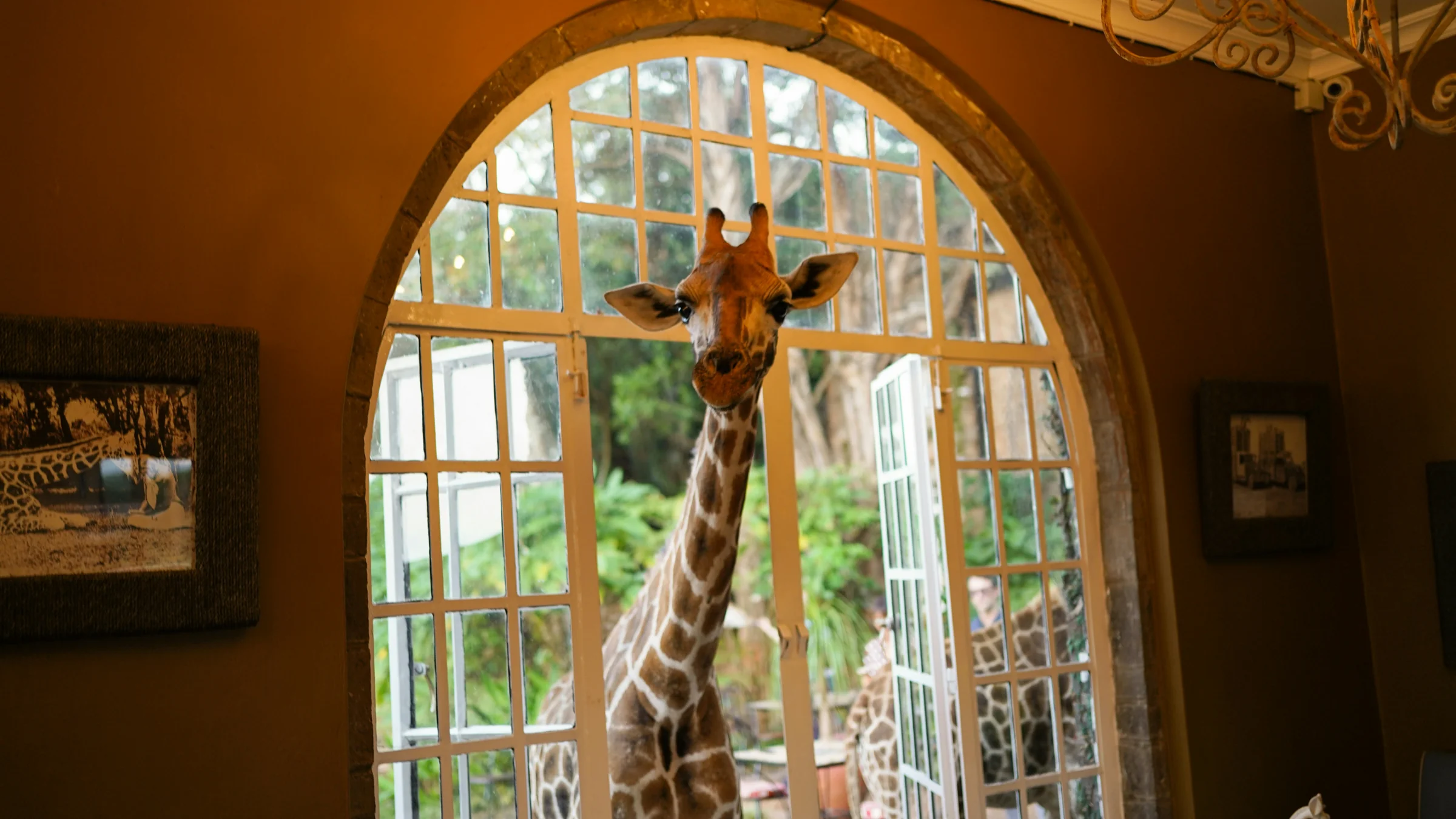
Giraffe Manor, Nairobi. The 12-room property where Rothschild giraffes show up at breakfast. The challenge is not awareness — Giraffe Manor is one of the most-photographed hotels in the world. The challenge is the bookable conversion of a property whose Instagram presence has commoditized the photo without telling the deeper story. The Trepic dispatch on Giraffe Manor is built explicitly to convert the considerers — the people who saved the photo two years ago and have not yet booked. This is a category we call "high-recognition, low-conversion," and it is exactly where editorial-length writing earns its keep.
Aman Resorts. The opposite case: high-recognition, high-conversion already, but with a brand thesis (mindful luxury, intentional spaciousness, the philosophy behind the silence) that the standard travel press flattens into "expensive resort." The Aman dispatch articulates the thesis honestly — including what Aman is not — for the audience already considering the stay. Conversion lift on this kind of dispatch shows up not in nominal bookings but in the room category mix and length-of-stay, both of which migrate up.
Direct booking, post-OTA
The strategic prize of creator partnerships is not just incremental bookings. It is the long-term shift toward direct as the dominant channel. Creator-driven customers are statistically more likely to book direct on their second stay — they have a relationship with the property's story, not the booking interface. Each Trepic dispatch is, in effect, a long-term direct-booking funnel built on someone else's audience.
For boutique operators specifically, this is the only path. You cannot out-spend Booking on Google Ads. You cannot build a TikTok presence the way a chain can. What you can do — what only you can do — is be the hotel that has a story worth telling, then partner with the small number of creators who tell stories well to readers who care.
How to apply
The founding-partner-hotel cohort is curated. We are intentionally small in 2026 — the editorial bandwidth doesn't scale faster than the creator side does, and the rate is held for the first cohort only. The application is short and the review is honest: not every property is a fit, and we will tell you within 14 days either way.
If you operate a boutique property and the math above resonates, the entry point is Trepic for Brands. If you'd rather understand the creator side of the partnership first, see Trepic for Creators and the Monetize Travel Content guide.
This is, fundamentally, the creator economy meeting travel. AI-powered journaling that turns a writer's itinerary into a story, and the story into a revenue stream — for the hotel as much as for the writer.
Apply for the founding partner hotel cohort
Up to 20% commission, locked at signing, story-first distribution. Founding-partner rates close after the first cohort.
Hotel Application Join Waitlist